Wednesday, October 15, 2014

3 WAYS TO DETERMINE YOUR CLIMATE 

CHANGE STRATEGY

by Andrew J. Hoffman and John Woody

Once you’ve decided to be a greener corporate citizen, while adhering to climate change regulations, the next step is to determine how moving in this direction might be a competitive advantage for your business.
Start by doing a careful analysis of your company’s position on climate change and develop a strategy to create opportunities. The ultimate goal of any good business strategy is to create a measure of control over your future business environment. This process takes time. Think of your climate change strategy as a series of graduated steps, with some actions that are required now and others that reflect the extent to which your company seeks to strategically engage the issue. The timing of your strategy is directly related to the extent to which you wish to become engaged. The more advanced the step, the more urgent the timing.
Consider examining the following three steps as you prepare to develop a climate strategy.
1. Know your carbon exposure. Create an emissions inventory and assess your carbon footprint; then you can ask how potential changes in policy and market price will affect the positioning of your products and services in the months ahead and in the long term. Some companies measure actual emissions, while others estimate emissions using fuel-based calculations (based on methodologies such as those created by, the European Union Greenhouse Gas Emission Trading Scheme, the U.S. Department of Energy and others). These methodologies use the energy value of the fuel consumed multiplied by its carbon intensity (pounds of CO2 emitted per million BTU). What you find when doing this exercise might shock you. Shoe manufacturer Timberland was surprised to discover that the major carbon impact of its product came from the manufacture of its raw materials–not from the transportation of its materials and final product, as they had expected.
Understand your exposure first, then make a plan.
2. Take action. Once you know your footprint, reduce it. Then assess your business opportunities in doing so. Companies generally begin this assessment with a focus on risk management and bottom-line protection, which focuses their efforts on efficiency opportunities. If you have not looked at efficiency, achieving significant savings is attainable. If you have divisions in a region of the world that already has carbon controls, this decision has been made for you. If not, take advantage of this brief vacuum in time and take action now, at your own pace, rather than waiting for regulation’s enforced timetable.
3. Influence the policy-development process. There’s an old adage that says, if you’re not at the table, you’re on the menu. Policies will set the rules of the game and change the competitive landscape, favoring certain actions, companies, and industries. Companies can offer valuable insights into ways that will yield the most cost-effective and efficient policies. The reality is that governments can’t do it alone. They don’t have the capacity to understand the implications of the different policy options on all sectors of the economy. But to gain a seat at the table, you must first take credible action and develop legitimate expertise to bring to bear. Industry associations can provide useful forums for all types of companies to engage in the policy arena.
In the end, you don’t need to study photos of receding glaciers or pore over the latest scientific reports to know that climate change is already happening. Just look at your marketplace, your competitors, and your boardroom. Some companies are adapting out of near-term operational necessity, others are acting to mitigate long-term strategic vulnerabilities, and the most forward-thinking are devising ways to profit from clean energy and efficient technology.
What are you doing?
Fuente: Harvard Business Review

Haciendo click en cada uno de los links siguientes, 
accederán a los Contenidos de nuestros 
TALLERES DE CAPACITACIÓN IN COMPANY A MEDIDA:
(translator on page)

¿Cómo INCORPORAR y APLICAR Modelos de
PENSAMIENTO ESTRATÉGICO?

http://msg-latam-meic.blogspot.com.ar/2014/06/capacitacion-in-company-programa_6246.html

¿Cómo GERENCIAR EFICAZMENTE a partir del
MANAGEMENT ESTRATÉGICO?

http://msg-latam-meic.blogspot.com.ar/2014/06/capacitacion-in-company-programa_3.html

¿Cómo GERENCIAR PROCESOS DE CAMBIO
y no sufrir en el intento?

http://msg-latam-meic.blogspot.com.ar/2014/06/capacitacion-in-company-programa.html

¿Cómo IMPLEMENTAR ESTRATEGIAS EFECTIVAS?
Recetas para Escenarios Turbulentos

http://msg-latam-meic.blogspot.com.ar/2014/06/capacitacion-in-company-taller-de.html

Consultas al mail: msg.latam@gmail.com
ó al TE: +5411-3532-0510

EXOSKELETON - EXOESQUELETO

(by Dilbert)


Created by Scott Adams, Dilbert is about the world's most famous -- and funny -- dysfunctional office

Haciendo click en cada uno de los links siguientes, 
accederán a los Contenidos de nuestros 
TALLERES DE CAPACITACIÓN IN COMPANY A MEDIDA:
(translator on page)

¿Cómo INCORPORAR y APLICAR Modelos de
PENSAMIENTO ESTRATÉGICO?

http://msg-latam-meic.blogspot.com.ar/2014/06/capacitacion-in-company-programa_6246.html

¿Cómo GERENCIAR EFICAZMENTE a partir del
MANAGEMENT ESTRATÉGICO?

http://msg-latam-meic.blogspot.com.ar/2014/06/capacitacion-in-company-programa_3.html

¿Cómo GERENCIAR PROCESOS DE CAMBIO
y no sufrir en el intento?

http://msg-latam-meic.blogspot.com.ar/2014/06/capacitacion-in-company-programa.html

¿Cómo IMPLEMENTAR ESTRATEGIAS EFECTIVAS?
Recetas para Escenarios Turbulentos

http://msg-latam-meic.blogspot.com.ar/2014/06/capacitacion-in-company-taller-de.html

Consultas al mail: msg.latam@gmail.com
ó al TE: +5411-3532-0510

Monday, October 13, 2014

PROJECT BEHIND SCHEDULE

PROYECTO DEMORADO

(by Dilbert)


Created by Scott Adams, Dilbert is about the world's most famous -- and funny -- dysfunctional office

Haciendo click en cada uno de los links siguientes, 
accederán a los Contenidos de nuestros 
TALLERES DE CAPACITACIÓN IN COMPANY A MEDIDA:
(translator on page)

¿Cómo INCORPORAR y APLICAR Modelos de
PENSAMIENTO ESTRATÉGICO?

http://msg-latam-meic.blogspot.com.ar/2014/06/capacitacion-in-company-programa_6246.html

¿Cómo GERENCIAR EFICAZMENTE a partir del
MANAGEMENT ESTRATÉGICO?

http://msg-latam-meic.blogspot.com.ar/2014/06/capacitacion-in-company-programa_3.html

¿Cómo GERENCIAR PROCESOS DE CAMBIO
y no sufrir en el intento?

http://msg-latam-meic.blogspot.com.ar/2014/06/capacitacion-in-company-programa.html

¿Cómo IMPLEMENTAR ESTRATEGIAS EFECTIVAS?
Recetas para Escenarios Turbulentos

http://msg-latam-meic.blogspot.com.ar/2014/06/capacitacion-in-company-taller-de.html

Consultas al mail: msg.latam@gmail.com
ó al TE: +5411-3532-0510

CULTURE: HOW BOB IGER REMADE THE HOUSE 
THAT WALT DISNEY BUILT
(Part 4 out of 4)
by J. P. Donlon
Even iconic brands need fixing from time to time. But instead of the easy fixes, Bob Iger played the long game by addressing Disney’s cultural issues head-on with a three-pronged strategy, making it a stronger, more profitable company with greater depth in its overall brand. The takeaway for CEOs is that, yes, culture—and persistence—matter


Shanghai Disney is one of the biggest investments that you’ve made on your watch, perhaps one of the biggest in the company’s history. How does it fit into your priority of expanding global growth?

Setting aside the investment Walt made in central Florida to create Disney World, the biggest investment we made in our history was buying Capital Cities/ABC—a $19.5 billion gutsy investment by Michael [Eisner]. Pixar was the second-largest at $7.3 billion. Shanghai Disneyland is the third. In terms of non-acquisition, organic investment, it is the biggest. No question. In terms of the company’s future, it is the most exciting. You’re looking at the most populous city in the most populous country in the world. [It’s] a market that Disney is known in but one in which we haven’t really penetrated deeply [until now] for a variety of reasons.

It has the potential to ground our brand or build a foundation for our brand in China that could pay off for generations to come. In terms of global growth, it’s just huge.

We’re already bringing our movies to China, and China is now the No. 2 movie market in the world, but [it’s] growing, and will become the No. 1 movie market by the end of this decade or the very beginning of the next decade.

The movies that we make—Marvel, Pixar, Disney, Star Wars—are not only valuable brands in China, but these franchises will all have a presence eventually in this park. It certainly sets up our movie business better in what will be the No. 1 movie market in the world. 

Clearly, there will be consumer products opportunities that grow from this. But more than anything, it’s people having a connection to Disney, an affinity for Disney, and an experience with Disney that will serve the brand and its businesses well for a long time.

Acquiring ESPN along with ABC didn’t seem very important, but it became a Cinderella, contributing around 45 percent of Disney revenues. Where do you take them from here?

Technology has the potential to be ESPN’s biggest friend in terms of growth. Because ESPN’s mantra or guiding principle is to serve the sports fan anywhere, anytime, technology can give the fan even more access to what the fans are most passionate about. A primary example is smart mobile devices. Such devices enable you to watch your favorite sport, your favorite athlete, your favorite team, wherever and whenever you want. And that gives ESPN a tremendous opportunity to serve their fans in even more impactful ways.

Not only will technology enable ESPN to cover sports better, cover more sports and give the fan an even better experience, but it will provide much more accessibility than ever before. That should power ESPN’s growth rather significantly over the next decade. Mobile technology is the most exciting thing—by the way, not just for ESPN—but for our other businesses, Disney, Marvel, Pixar, ABC and all of our critical brands.

Having been on the board of Apple since late 2011, what takeaways have you been able to incorporate into Disney and what influences has Disney had on Apple?

Apple today is what Steve Jobs created—high quality, relentless pursuit of perfection when it comes to their products and unbelievable attention to design and aesthetics. Everything they do adheres to those values and attributes of the brand. I observed from Steve and adopted some of his priorities as our own. Seeing him do it gave me even more impetus or drive to do similar things—or to do what I had wanted to do anyway.

There are similarities in what I brought to Apple. For example, we’re both big believers in the power of brands and the need to continue to feed brands with innovation. I bring a little bit more experience as a CEO of a global company perhaps. I like to think that I can offer some advice and perspective to Tim Cook, who I respect tremendously, as a relatively newer CEO. Obviously my media experience is valuable, as I am the only board member with that experience. I’m now more of an elder statesman.

Is it true that Steve Jobs once called you up after seeing a Disney film and said, “Bob, that movie sucks.”

That’s true. He did. Steve and I used to talk a lot; and frequently, he called me on weekends because it was a great time for us to not only catch up but to muse about all sorts of things. 

One afternoon, he called to say, “Hey, Bob, my son and I just went to one of your movies, and it sucked.” And I said, “Well, you may think it sucked, but it did $100 million in box office this weekend, so there are a lot of other people [who] thought otherwise. And while I think that there were some things about the film that could have been better, I respectfully disagree.”

I liked being challenged by him in that regard because even if I disagreed with him, there was always a kernel of truth to what he had to say. There was always something; it wasn’t completely wrong. It drove me to want to demand even more perfection and excellence. He had that impact on me. In fact, I talked about this at our management retreat last fall—the relentless pursuit of perfection. While it can easily be a turnoff, something that you’d want to run from because who needs that kind of criticism, I always took it as being constructive.

Steve Jobs may have been Disney’s largest shareholder, but if I ever said to Steve on a call, 

“You are a member of the board,” or “You are our largest shareholder,” he’d say, “Stop. I do not want to be called either. I want to be thought of by you as a trusted advisor and a friend.” Anytime I mentioned board member or shareholder, he reminded me of that. Finally, I decided to accept him as a trusted advisor and a friend, and he proved to me over time that that’s exactly what he was to me.

If Walt were alive today, what do you reckon he might say about you?

Funny you would ask. I spoke with Diane Disney, one of his daughters, about that before she died. I actually wrote her a note: “If Walt were to see those gorgeous cruise ships plying the oceans, or even Walt Disney World, or imagine Shanghai, what would he think?” Interestingly enough, for a guy from the Midwest, he had a real curiosity about the world. He would be blown away to know that China would be the home to a product that was so much a part of who he was and what he stood for—Disneyland.

But if he also saw Pixar, or Star Wars or Marvel—think of the storytelling and the characters and the places that these stories exist. [Take] ESPN, for that matter. I think he would be unbelievably proud. This is a bit presumptuous of me, but what the heck, maybe I’ve earned the right to be and also to see, on any list about brand respect and admiration that exists in the world today. [This is] a company that he founded; the brand that he created is still at or near the top of those lists. I mean, what could be a better affirmation for the principles that he embedded in the company that he created?

Fuente: Chief Executive

Haciendo click en cada uno de los links siguientes, 
accederán a los Contenidos de nuestros 
TALLERES DE CAPACITACIÓN IN COMPANY A MEDIDA:
(translator on page)

¿Cómo INCORPORAR y APLICAR Modelos de
PENSAMIENTO ESTRATÉGICO?

http://msg-latam-meic.blogspot.com.ar/2014/06/capacitacion-in-company-programa_6246.html

¿Cómo GERENCIAR EFICAZMENTE a partir del
MANAGEMENT ESTRATÉGICO?

http://msg-latam-meic.blogspot.com.ar/2014/06/capacitacion-in-company-programa_3.html

¿Cómo GERENCIAR PROCESOS DE CAMBIO
y no sufrir en el intento?

http://msg-latam-meic.blogspot.com.ar/2014/06/capacitacion-in-company-programa.html

¿Cómo IMPLEMENTAR ESTRATEGIAS EFECTIVAS?
Recetas para Escenarios Turbulentos

http://msg-latam-meic.blogspot.com.ar/2014/06/capacitacion-in-company-taller-de.html

Consultas al mail: msg.latam@gmail.com
ó al TE: +5411-3532-0510

Wednesday, October 8, 2014

CULTURE: HOW BOB IGER REMADE THE HOUSE 
THAT WALT DISNEY BUILT
(Part 3 out of 4)
by J. P. Donlon
Even iconic brands need fixing from time to time. But instead of the easy fixes, Bob Iger played the long game by addressing Disney’s cultural issues head-on with a three-pronged strategy, making it a stronger, more profitable company with greater depth in its overall brand. The takeaway for CEOs is that, yes, culture—and persistence—matter


The company had grown very large, particularly after the acquisition of Capital Cities/ABC. And it was operating in many changing and dynamic businesses.

While it had made sense to create overall strategy at the center, we had grown so large and were operating in such dynamic businesses that I thought that actually slowed decision-making down, lessened accountability and created at some level—more inadvertent than purposeful—of mistrust, where business units didn’t feel as trusted as they needed to be by the corporation. What had served us well in the past was no longer optimal.

So how do you manage the company differently today?

While we still have strategic planning, it’s reconstituted with a different mission. For one thing, the business units create their own strategies. I want them to fit into a framework of the company, and they need to be consistent with the company’s strategic priorities. But a different strategy for each business had to emanate from the businesses and be implemented by the businesses.

In addition, most key business decisions that were being made needed to be made by the individual businesses, with either the approval, knowledge or even involvement in an advise-and-consent sense of the corporation. The business units had to feel not only a sense of empowerment but a sense of ownership over their own destinies—and thus a sense that they were trusted. If they could not be trusted, then instead of taking away the freedom and responsibility from them, we had to get new people.

Shortly after becoming CEO, you struck a deal with Steve Jobs and Apple to put a Disney app on the then new video iPod and iTunes. Why was it considered controversial at the time?

That was a huge step—or a very loud signal to the company that technology could be viewed as friend, not foe, or as opportunity, not threat. It affirmed that we were willing to take risks and were willing to challenge the status quo of our own businesses, willing to enter partnerships with technology companies and willing to embrace technology as a path to a much brighter future. This was probably the loudest message I could have sent to this company about change.

Let me pause here so I can show you one of my prized possessions. [Holds up framed photograph of him shaking Steve Jobs’ hand on stage at an Apple event.] On October 1, 2005, I officially become CEO of The Walt Disney Company. Three weeks later, I showed up on stage with this guy who, to the world, was our mortal enemy, because he controlled Pixar. In the court of public opinion, Steve Jobs was right and Disney was wrong. He wasn’t necessarily right about his opinions of Disney—but he was winning the perception battle. I showed up on stage at an Apple event, when he’s announcing the video iPod, and this picture commemorates our deal.

Going back to your question, these moves were not only designed to set us up in terms of future growth but to start shifting a culture and becoming a company that believed in itself again. I say this not to be critical of what happened before. But times had changed, and the needs of the company were very different. I took advantage of being a new CEO to make these moves. And they led to tangible, cultural change within the company.

Was there an instructive failure in your own career that helped form who you are today as a leader?

My parents, my father in particular, instilled in me a great work ethic and a level of ambition. A lot of it came from a desire to prove that I was up to challenges. I still feel that in me, by the way. I seek new challenges so I can prove that I’m worthy of more. That’s driven me in many ways.

Early on, I learned that if you owned your own failure, or embraced whatever disappointment, it was probably the best way to process and overcome the failure and disappointment. I remember early in my ABC Sports days a relatively trivial mistake had been made on a weekend sporting event on Wide World of Sports, where we simply missed a story that we should have had. In a Monday-morning session that the former head of ABC Sports, Roone Arledge, had, which was typically a postmortem of what went on during the weekend, whatever we had missed came up. There was silence around the room as Roone questioned what happened. At the time, I was young and low-titled and said, “It was my mistake. I missed that.” There was complete silence in the room. Everyone looked around. 

Here, I had admitted in front of the brass of then ABC Sports, including the head of it, that I had made a mistake.

It was the most empowering thing I could ever have done. We moved on. But what was interesting to me about this was it was a lesson. It was probably the first time I ever owned up to something like that in such a way. Looking back, it was relatively trivial, but it was unbelievably empowering. And the respect that people had for me for doing that actually put me in such a stronger, better position with everybody.
It taught me that if you failed, you have an ability to not just accept the failure and attempt to understand it but to be accountable for it. [Owning up to failure] offers the best chance to recover from it. It’s a lesson I’ve taken with me throughout [my career]. If something fails as a direct result of your decision and you take responsibility for it, you’re much more likely to endure than if you do the opposite.

Fuente: Chief Executive

Haciendo click en cada uno de los links siguientes, 
accederán a los Contenidos de nuestros 
TALLERES DE CAPACITACIÓN IN COMPANY A MEDIDA:
(translator on page)

¿Cómo INCORPORAR y APLICAR Modelos de
PENSAMIENTO ESTRATÉGICO?

http://msg-latam-meic.blogspot.com.ar/2014/06/capacitacion-in-company-programa_6246.html

¿Cómo GERENCIAR EFICAZMENTE a partir del
MANAGEMENT ESTRATÉGICO?

http://msg-latam-meic.blogspot.com.ar/2014/06/capacitacion-in-company-programa_3.html

¿Cómo GERENCIAR PROCESOS DE CAMBIO
y no sufrir en el intento?

http://msg-latam-meic.blogspot.com.ar/2014/06/capacitacion-in-company-programa.html

¿Cómo IMPLEMENTAR ESTRATEGIAS EFECTIVAS?
Recetas para Escenarios Turbulentos

http://msg-latam-meic.blogspot.com.ar/2014/06/capacitacion-in-company-taller-de.html

Consultas al mail: msg.latam@gmail.com
ó al TE: +5411-3532-0510

COMPANY LAWYER

ABOGADO DE LA COMPAÑÍA

(by Dilbert)


Created by Scott Adams, Dilbert is about the world's most famous -- and funny -- dysfunctional office

Haciendo click en cada uno de los links siguientes, 
accederán a los Contenidos de nuestros 
TALLERES DE CAPACITACIÓN IN COMPANY A MEDIDA:
(translator on page)

¿Cómo INCORPORAR y APLICAR Modelos de
PENSAMIENTO ESTRATÉGICO?

http://msg-latam-meic.blogspot.com.ar/2014/06/capacitacion-in-company-programa_6246.html

¿Cómo GERENCIAR EFICAZMENTE a partir del
MANAGEMENT ESTRATÉGICO?

http://msg-latam-meic.blogspot.com.ar/2014/06/capacitacion-in-company-programa_3.html

¿Cómo GERENCIAR PROCESOS DE CAMBIO
y no sufrir en el intento?

http://msg-latam-meic.blogspot.com.ar/2014/06/capacitacion-in-company-programa.html

¿Cómo IMPLEMENTAR ESTRATEGIAS EFECTIVAS?
Recetas para Escenarios Turbulentos

http://msg-latam-meic.blogspot.com.ar/2014/06/capacitacion-in-company-taller-de.html

Consultas al mail: msg.latam@gmail.com
ó al TE: +5411-3532-0510
Wednesday, October 1, 2014

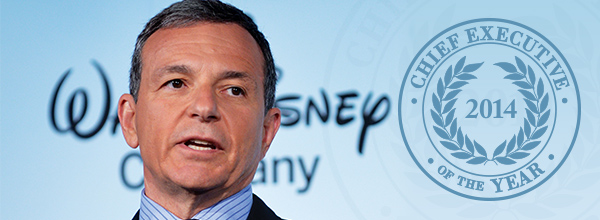
CULTURE: HOW BOB IGER REMADE THE HOUSE 
THAT WALT DISNEY BUILT
(Part 2 out of 4)
by J. P. Donlon
Even iconic brands need fixing from time to time. But instead of the easy fixes, Bob Iger played the long game by addressing Disney’s cultural issues head-on with a three-pronged strategy, making it a stronger, more profitable company with greater depth in its overall brand. The takeaway for CEOs is that, yes, culture—and persistence—matter


Some industry observers expect Iger to appoint a second-in-command before he departs. Iger declines to comment apart from saying that his successor, “needs to be someone who can adapt and not necessarily take the old playbook, the old rules, the old habits or the old culture. He may need to shift focus, culture or whatever to continue to maintain success and that great brand position that we’ve got in the world”.

When you became CEO in 2005, you seemed to face a triple challenge of trying to put the brand right and build revenue—but also to fix the culture—all in the face of having to follow a well-established leader. What did you set as your priority?

While I had very specific and ultimately well-articulated strategic priorities for the company, my rallying cry to the troops was that I wanted Walt Disney to be among the most admired and respected [companies] in the world. First, I wanted Disney to be admired and respected by the employees, “cast members,” as we call them fondly; because if we ultimately were going to be admired and respected by our shareholders and by our customers, it had to start at home. This also tied in with what I wanted to do around cultural change, which I’ll come back to.

After our employees, our investors and our consumers were also important. I created three primary strategic priorities for the company. One: Invest most of our capital in creating high-quality, branded content and experiences. Two: Embrace technology and use it aggressively to enhance the quality of our product and thus the consumer experience. To enhance what I’ll call “distribution” and thus access to our product. And lastly, to get closer to our customer by becoming more efficient as a company. Technology had to become a significant middle name for the company.

In addition, the third strategic priority was to invest much more aggressively in global growth because we had become too U.S.-centric. Interestingly enough, I came from a meeting with a group of folks at our company who are working on the agenda and presentations for an upcoming Disney board of directors retreat, which we do every June. The aim is to analyze and present to the board a strategic growth initiative through 2025. We’re beginning with the strategic priorities of the company, which are the same as what I created in 2005.

To what degree were you bothered by the fact that your predecessor had made comments to the effect that you were not up to the job, combined with press reports at the time that you were a “well-scripted CEO” but probably not a big, strategic thinker?

I prefer not to comment on or dwell on what any specific person said about me or believed about me when I got the job. I will say that even though I was the only internal candidate, and I knew the company and the board extremely well, there was a desire by many to bring great change to the company, because we had been through what had been a pretty difficult period. There was a feeling that any inside candidate would essentially perpetuate the status quo. This [attitude] motivated me because not only did I feel that I had a lot to prove, but I felt that I had a real opportunity to be an internal change agent. Besides, I was fairly thick-skinned at that point because I had been through a lot of that.

In hindsight, what was the most difficult challenge?

Clearly, it was shifting the culture from a company that did not believe in itself as much as it needed to [do], to a company that believed in itself and its future, was optimistic about its future and respectful of its product and its leadership.

What did you have to do to make that happen?
There were a lot of things. One of them was to redirect or disband, as the company had known it, its strategic planning arm. I thought the individual businesses needed to own more of their strategy, as opposed to being owned by the corporate entity. It was important for each business to take more responsibility and accountability for its own strategy.

Fuente: Chief Executive

Haciendo click en cada uno de los links siguientes, 
accederán a los Contenidos de nuestros 
TALLERES DE CAPACITACIÓN IN COMPANY A MEDIDA:
(translator on page)

¿Cómo INCORPORAR y APLICAR Modelos de
PENSAMIENTO ESTRATÉGICO?

http://msg-latam-meic.blogspot.com.ar/2014/06/capacitacion-in-company-programa_6246.html

¿Cómo GERENCIAR EFICAZMENTE a partir del
MANAGEMENT ESTRATÉGICO?

http://msg-latam-meic.blogspot.com.ar/2014/06/capacitacion-in-company-programa_3.html

¿Cómo GERENCIAR PROCESOS DE CAMBIO
y no sufrir en el intento?

http://msg-latam-meic.blogspot.com.ar/2014/06/capacitacion-in-company-programa.html

¿Cómo IMPLEMENTAR ESTRATEGIAS EFECTIVAS?
Recetas para Escenarios Turbulentos

http://msg-latam-meic.blogspot.com.ar/2014/06/capacitacion-in-company-taller-de.html

Consultas al mail: msg.latam@gmail.com
ó al TE: +5411-3532-0510